How to Start Cloth Diapering: The Complete Beginner's Guide | Bayrli®
How to Start Cloth Diapering: The Complete Beginner's Guide
Cloth diapering is simpler than the internet makes it look. The sheer volume of advice, acronyms, brand comparisons, and wash routine debates can make it feel as though you are preparing for a certification rather than putting a diaper on a baby. It does not need to be that way.
This guide covers everything a new parent needs to know to start cloth diapering with confidence. It is structured as a decision-making framework: what to buy, how much of it, how to use it, how to wash it, and what to do when something goes wrong. If you read only one article on our site before starting, make it this one.
Why Parents Choose Cloth Diapers
There are three reasons parents switch to cloth, and most families are motivated by a combination of all three.
Cost. Disposable diapers cost between $2,200 and $3,000 per child from birth to potty training. A complete cloth diaper system costs $400 to $700 upfront, plus roughly $150 to $250 per year in laundry. Over one child, the savings are $1,000 to $2,000. Over two children using the same diapers, the savings reach $3,000 to $4,500. We have published a detailed cost breakdown if you want to see the full numbers.
Environment. A single child in disposable diapers generates approximately one tonne of landfill waste that will persist for 250 to 500 years. Cloth diapers, when used sensibly, reduce that environmental footprint by up to 40% across the full lifecycle. Our environmental impact comparison lays out the evidence.
Health. Disposable diapers contain chemicals including dioxins, sodium polyacrylate, and phthalates. Cloth diapers made from natural fibres contain none of these substances. Many parents report that switching to cloth resolved persistent nappy rash that disposables were causing.
Understanding the Types of Cloth Diapers
Modern cloth diapers bear no resemblance to the folded rectangles and safety pins your grandparents used. There are several designs available, and understanding the basics will help you choose.
Pocket diapers have a waterproof outer shell with an opening (the pocket) where you insert absorbent pads. They are easy to customise: you choose how much absorbency to stuff in based on your baby's needs. After use, you remove the insert for washing and wash both pieces. Our Everyday Diaper is a pocket diaper.
All-in-one diapers (AIOs) have the absorbency sewn directly into the waterproof shell. Nothing to stuff; nothing to assemble. Put it on, take it off, wash it. The trade-off is that they take longer to dry and offer less flexibility to customise absorbency. Our Deluxe Diaper is an all-in-one.
Fitted diapers plus covers are a two-piece system. The fitted diaper is entirely absorbent; the cover provides the waterproofing. This gives you the highest possible absorbency, making it the preferred system for overnight use and heavy wetters. The cover can often be reused between changes if it has not been soiled. Our Inner and Outer system works this way.
Prefolds and flats are rectangular pieces of absorbent fabric that you fold and place inside a waterproof cover. They are the most economical option and the most versatile, but require a few more steps at each change. We offer organic prefolds in several sizes.
For most beginners, we recommend starting with pocket diapers or all-in-ones. They are the closest experience to using a disposable diaper: fasten, wear, remove, wash. Once you are comfortable with the routine, you can explore other systems if you wish.
How Many Cloth Diapers Do You Need?
This depends on how often you plan to wash. The standard recommendation is enough diapers for two to three days between washes.
For a newborn (0 to 3 months), expect 10 to 12 changes per day. A stash of 24 to 36 diapers gives you a comfortable two-day rotation.
For an older baby (3 months and above), expect 6 to 8 changes per day. A stash of 20 to 30 diapers provides a two- to three-day rotation.
If these numbers feel daunting, start smaller. Many parents begin with 6 to 8 cloth diapers and use disposables for the remainder while they build confidence. There is no rule that says you must cloth diaper full-time from day one. Part-time cloth diapering still saves money and reduces waste.
Our diaper calculator will give you a personalised recommendation based on your baby's age and how often you plan to wash. Our kits and bundles are pre-configured with the right quantities for full-time and part-time use.
What Else You Need
Beyond the diapers themselves, you will want a few accessories.
Wet bags for storing soiled diapers between washes and for carrying dirty diapers when you are out. One large bag for home and one or two smaller bags for your changing bag is sufficient. Browse our wet bags.
Inserts and boosters for additional absorbency. Your diapers will come with inserts, but you may want extra capacity for overnight, long outings, or heavy wetters. Natural fibre inserts in hemp and bamboo provide the most absorbency per layer.
Liners to make solid waste cleanup easier. A reusable or disposable liner placed on top of the diaper catches solids, which you can then lift off and dispose of without scraping.
Reusable wipes are optional but logical. If you are already washing cloth diapers, adding cloth wipes to the wash is effortless and eliminates the ongoing cost of disposable wipes.
You do not need a special detergent, a diaper sprayer, or any other specialist equipment to get started. These are useful additions that some parents choose later, but none of them are necessary on day one.
How to Prep New Cloth Diapers
New cloth diapers need to be washed before first use. Natural fibre inserts contain oils that reduce absorbency until they have been washed out. The number of prep washes varies by material. Our full prep guide covers every Bayrli product specifically, but as a general rule: wash shells once, wash cotton and bamboo inserts two to four times, and wash hemp inserts three to five times.
You can use your diapers before they are fully prepped, but they will not absorb as much and you may need to change more frequently until the fibres have opened up.
How to Put On a Cloth Diaper
The process is essentially identical to fastening a disposable diaper.
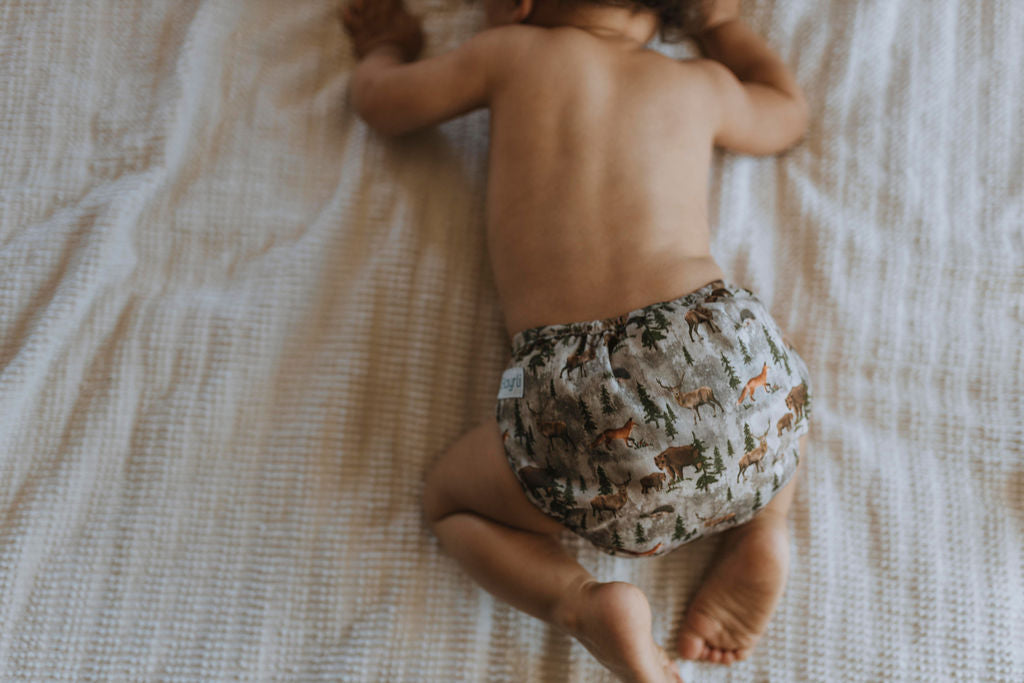
Lay the diaper under your baby with the back edge at waist level. Pull the front up between the legs. Fasten the tabs at the waist using the snaps or hook-and-loop closure. Check that the elastic gussets are sitting in the creases of the legs, not on the thighs. Ensure no fabric is folded outward or creating a wick. Two fingers should fit comfortably between the waistband and your baby's tummy.
The fit is the single most important factor in preventing leaks. Take a few changes to experiment and get it right. Our fit guide has detailed instructions and common adjustments.
How to Handle Dirty Diapers
Wet diapers: Remove and place directly in your wet bag or pail. No rinsing needed.
Breastfed baby poo: Fully water-soluble. Place the entire diaper in your wet bag or pail; it will wash out completely. No rinsing or scraping needed.
Formula-fed or solid food poo: Remove solids before storing. You can scrape solids into the toilet, use a diaper sprayer, or use a disposable liner that catches solids and can be lifted off and flushed or binned.
Store soiled diapers in a dry pail or wet bag (not soaking in water) and wash within two to three days.
How to Wash Cloth Diapers
This is the aspect that generates the most anxiety and the most conflicting advice. The reality is straightforward.
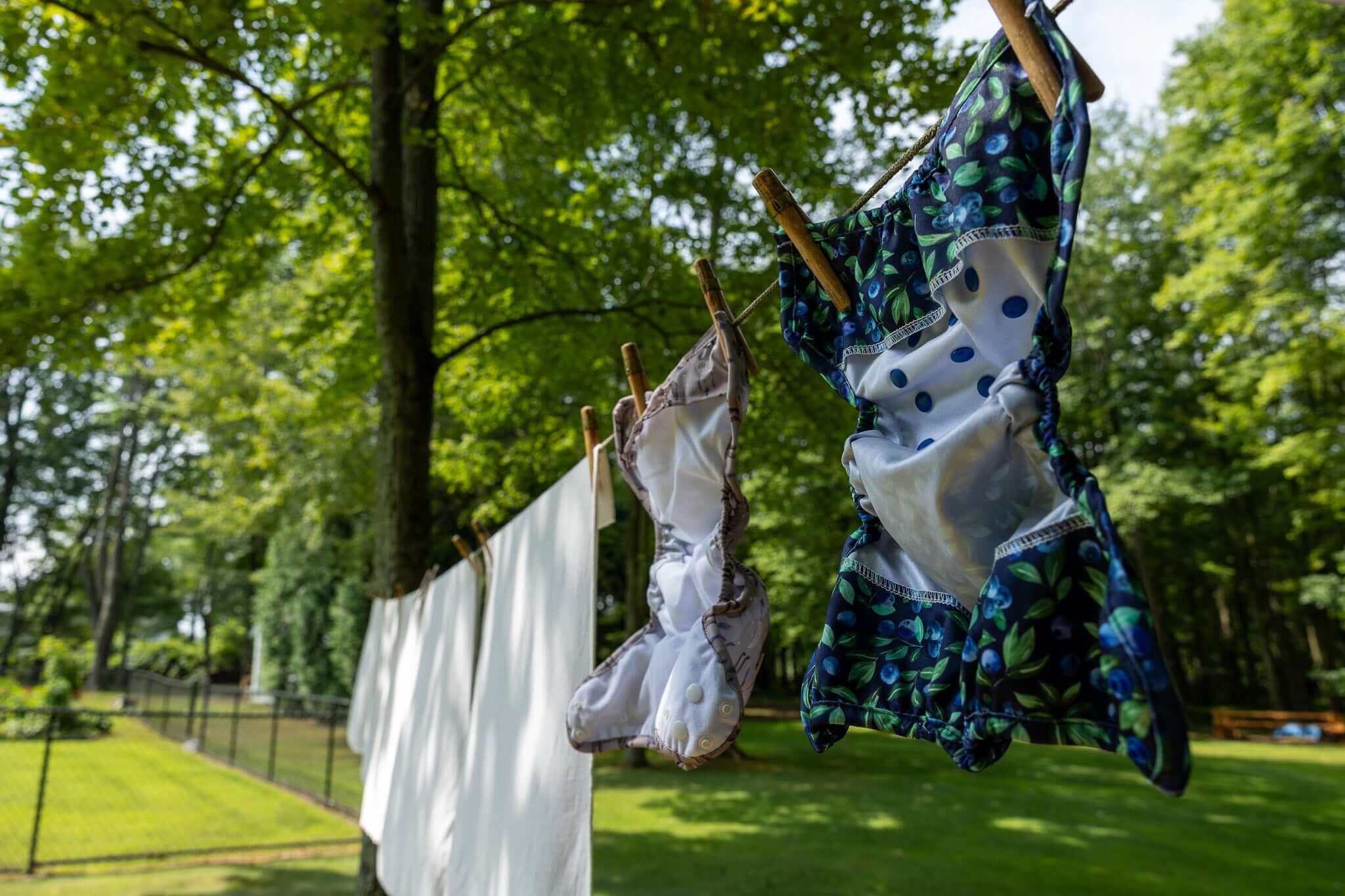
Run a short pre-wash at 40°C with half a dose of detergent to flush out the worst of the soiling. Then run a long main wash at 60°C with a full dose of detergent for a heavily soiled load. Your drum should be approximately two-thirds full; add small household items if needed to reach this level. Line dry or tumble dry inserts on low heat; line dry waterproof shells.
That is genuinely it. Our comprehensive washing guide covers detergent selection, hard water, common mistakes, and troubleshooting.
Using Cloth Diapers at Daycare and on Days Out
Many childcare providers accept cloth diapers, though some do not. It is worth having this conversation early. All-in-one diapers tend to be the most daycare-friendly because they require no assembly and work identically to disposables from the carer's perspective. Provide your daycare with a wet bag for soiled diapers, and they will send them home for you to wash.
For days out, pack a small wet bag in your changing bag for dirty diapers. Bring one or two more cloth diapers than you think you will need. The process is the same as at home: change, seal the soiled diaper in the wet bag, put on a fresh one. Many parents find cloth diapers more reliable than disposables on days out because blowouts are significantly less common in a well-fitting cloth diaper.
When Things Go Wrong
The two most common problems new cloth diaper parents encounter are leaks and smells. Both are solvable.
If your diapers are leaking, the cause is almost always fit, insufficient absorbency, or buildup. Our leaking troubleshooter works through every possible cause with a specific fix for each.
If your diapers smell despite washing, the most likely causes are insufficient detergent, low wash temperature, or hard water mineral buildup. Revisit your wash routine and consider stripping your diapers if buildup is the issue.
Starting Small
If the idea of committing to a full stash of cloth diapers feels overwhelming, start with a trial. Our Try It Kit includes everything you need to test the Bayrli system on your baby for a few days before deciding whether to invest in a full setup. There is no commitment, no risk, and you will know within a week whether cloth diapering works for your family.
Cloth diapering is not an all-or-nothing proposition. Every cloth diaper you use is one disposable diaper that does not end up in a landfill. Whether you cloth diaper full-time, part-time, or only at home, the savings and environmental benefits scale with however much you choose to do.
Frequently Asked Questions
Is cloth diapering hard? No. The learning curve is real but short. Most parents find that after a week of cloth diapering, the routine feels as natural as disposables. The initial adjustment is in learning the fit and establishing a wash routine; both become automatic quickly.
Can I start cloth diapering with a newborn? Yes. Many parents start from birth. Newborns go through more diapers per day, so you will need a larger stash or will need to wash more frequently. Our one-size diapers fit from approximately 3.5kg (8lb) to potty training, so you will not need to buy separate newborn-sized diapers.
What if my partner or family members are sceptical? Start with all-in-one diapers. They work identically to disposables and require no explanation. Once the people around you see that cloth diapers are neither complicated nor unpleasant, the scepticism tends to resolve itself.
How much does it cost to start cloth diapering? A full-time Bayrli system ranges from approximately $400 to $700 depending on which products and bundles you choose. A part-time starter setup or trial kit costs significantly less. See our cost breakdown for the full picture.
Do cloth diapers smell? Clean cloth diapers should not smell. If they do, your wash routine needs adjustment. Between washes, a dry pail or sealed wet bag contains odour effectively. Many parents report that cloth diapers smell less than a bin full of disposables.
How many cloth diapers do I need? For full-time use washing every two to three days: 24 to 36 for newborns, 20 to 30 for older babies. Our diaper calculator provides a personalised recommendation.