The Best Cloth Diapers for Newborns: What to Look For and When to Start | Bayrli®
The Best Cloth Diapers for Newborns: What to Look For and When to Start
Newborn cloth diapering has a reputation for being complicated, and that reputation is largely undeserved. The core challenge is that newborns are small, and many cloth diapers are designed for babies who are a few months old. But this gap has narrowed significantly with modern designs, and most parents can start cloth diapering within the first few weeks with the right setup.
Can You Cloth Diaper from Birth?
Yes. Many families start from day one. The practical considerations are:
Hospital stay. Most hospitals provide disposable diapers during your stay. There is no pressure to cloth diaper in hospital; save your energy for recovery.
The first week. The first week at home is intense. Meconium (your newborn's first bowel movements) is thick, dark, and sticky. It will wash out of cloth diapers, but many parents find it easier to use disposables for the first few days and switch to cloth once the meconium phase passes and normal breastfed or formula-fed stools begin. This is a reasonable choice and does not undermine your cloth diapering commitment.
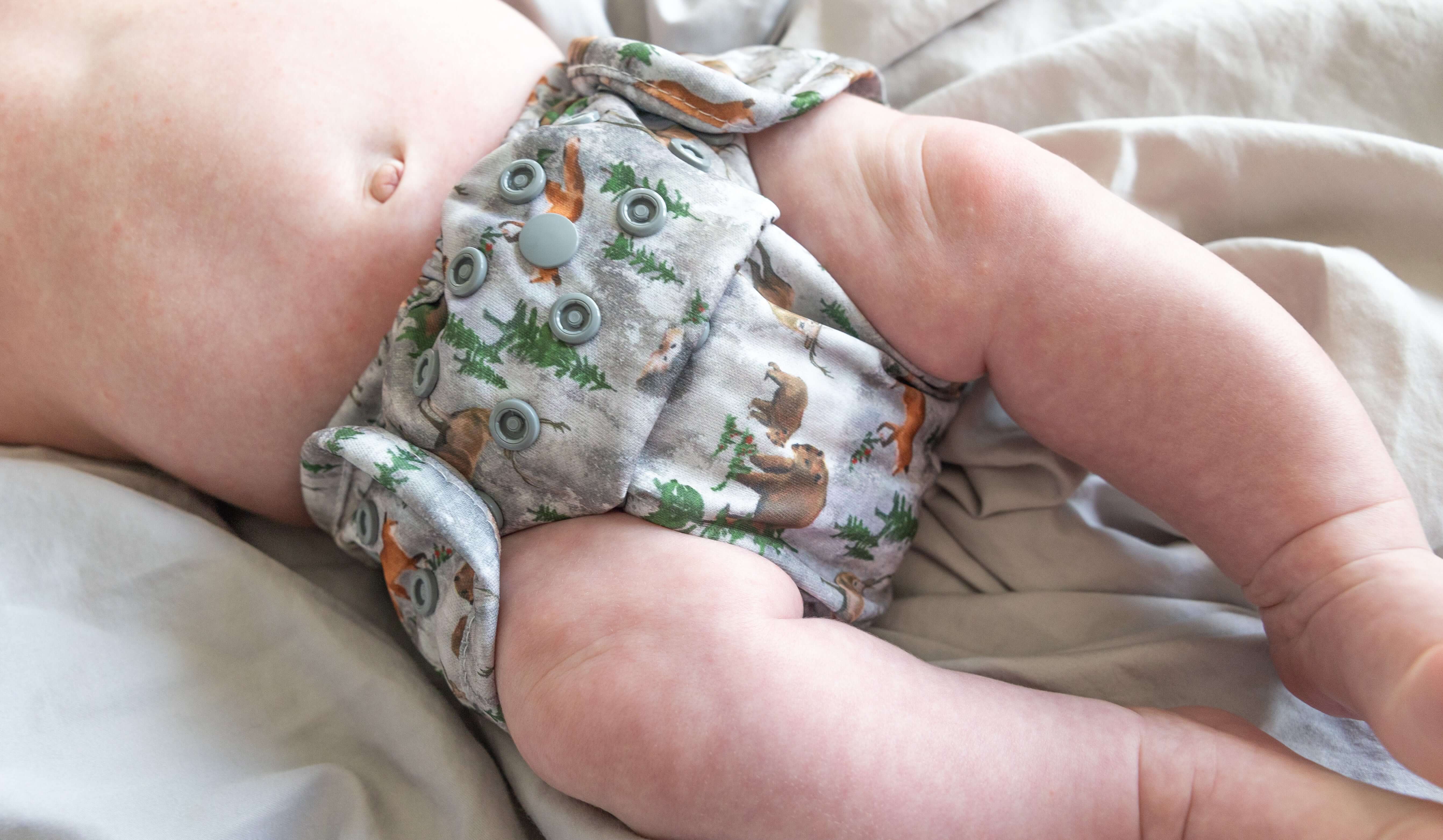
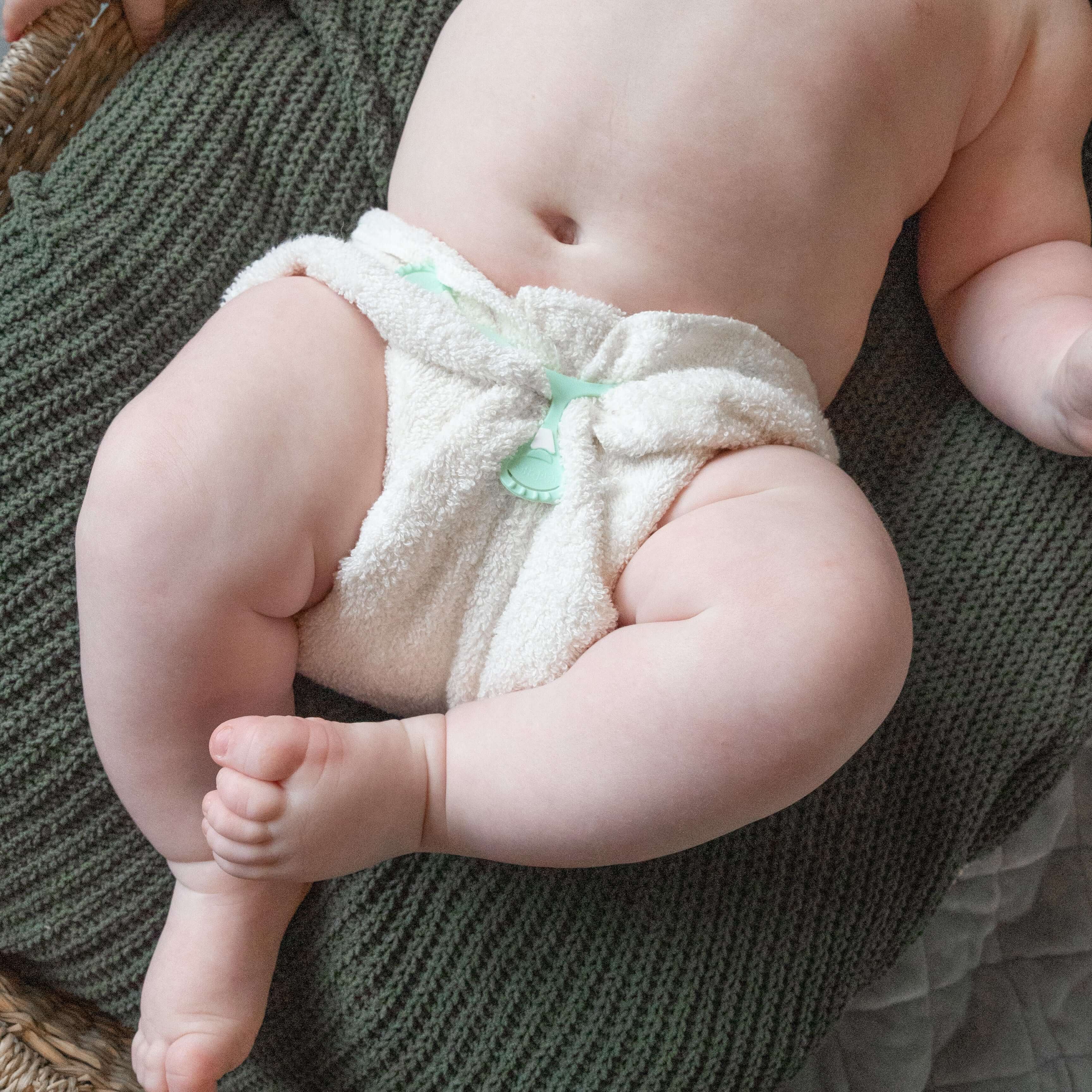
Umbilical cord stump. Until the cord stump falls off (typically 7 to 21 days), you want the diaper to sit below it. One-size diapers with snap-down rise can usually be adjusted to sit low enough, but check the fit. Some parents fold the front of the diaper down to clear the stump.
Do You Need Newborn-Specific Diapers?
This is the central question. There are two approaches.
One-size diapers adjust from approximately 3.5kg (8lb) to potty training using snap-down rise adjustments. The advantage is that you buy one set of diapers that lasts the entire diapering period. The trade-off is that on very small newborns (under 4.5kg / 10lb), the fit can be bulkier than a dedicated newborn size. Most one-size diapers fit well from around 2 to 3 months onward.
Newborn-sized diapers are designed specifically for smaller babies and provide a trimmer fit on tiny legs and narrow hips. The trade-off is that they are outgrown within 2 to 4 months, requiring a separate investment.
Our recommendation: start with one-size diapers and use disposables for the first few weeks if the fit is not yet ideal on your newborn. Most babies reach a weight where one-size diapers fit well by 4 to 6 weeks. The cost savings of not buying a separate newborn stash are significant: a set of newborn-specific diapers used for only 2 to 3 months is the least cost-effective cloth diaper investment you can make.
If you want to test whether cloth diapering works for your family before investing in a full stash, our Try It Kit lets you try the system at minimal cost.
What to Look for in Newborn Cloth Diapers
Regardless of whether you choose one-size or newborn-specific diapers, the following features matter most.
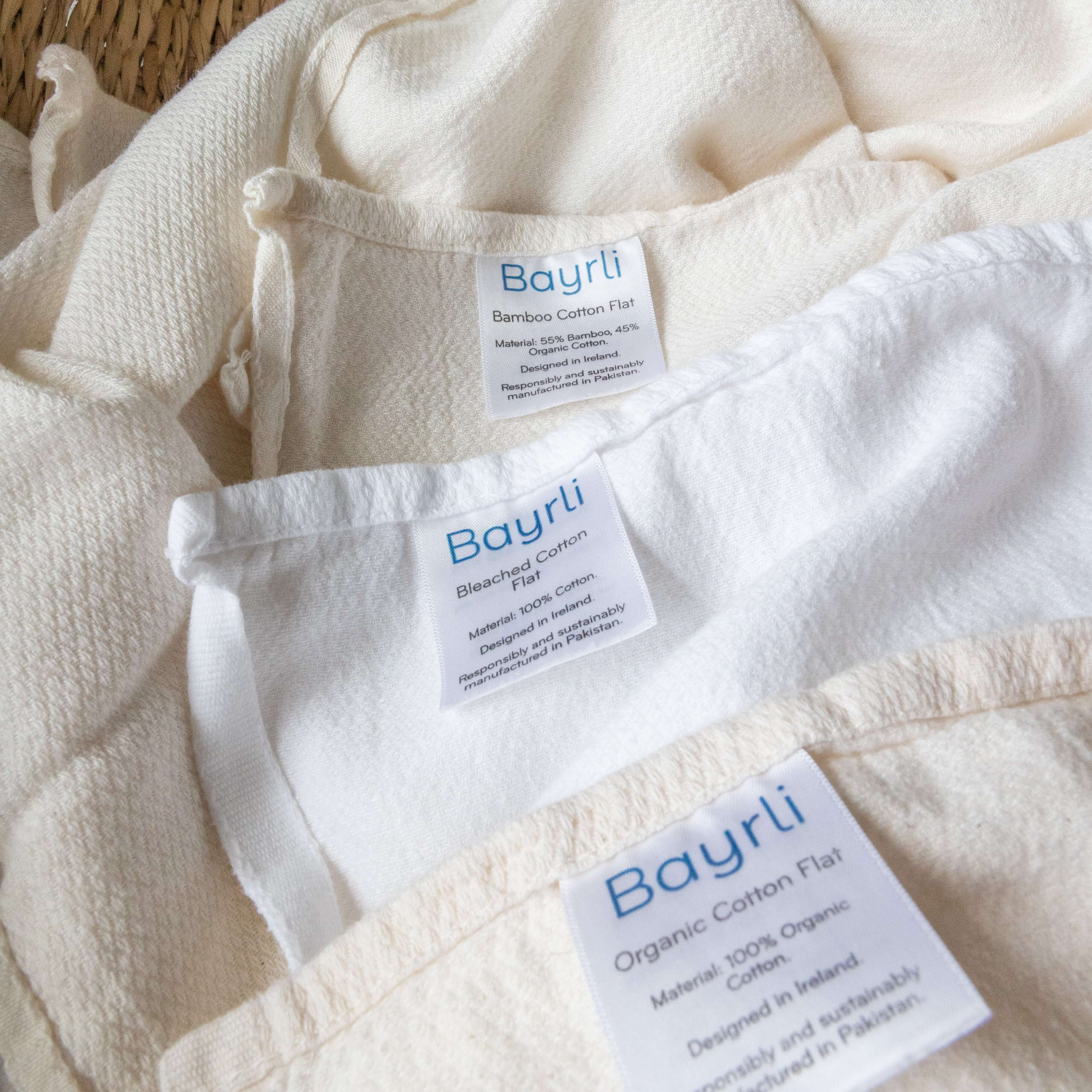
Soft, natural fibre skin contact. Newborn skin is exceptionally sensitive. Organic cotton against the skin is the gentlest option and eliminates chemical exposure from the first day. All Bayrli diapers use certified organic cotton for skin-contact surfaces.
Umbilical cord clearance. The diaper should be adjustable to sit below the navel. Snap-down rise systems allow this.
Quick-drying absorbency. Newborns go through 10 to 12 diapers per day. Quick-drying inserts and shells reduce the number of diapers you need in your stash.
Secure fit on small legs. The leg gussets should sit snugly in the leg creases without gaps. This is where most newborn leaks originate.
Handling Newborn Poo
Breastfed newborn poo is water-soluble. This is one of the most convenient aspects of early cloth diapering: you do not need to rinse, scrape, or spray anything. Place the entire soiled diaper directly into your wet bag or pail, and it will wash out completely in the machine.
Formula-fed poo is slightly thicker but is still generally wash-friendly in the newborn stage. Once your baby starts solid foods (typically around 6 months), you will want to start using liners or a diaper sprayer to remove solids before washing.
How Many Newborn Cloth Diapers Do You Need?
For full-time newborn cloth diapering with washing every two days, plan for 24 to 30 diapers. Newborns go through 10 to 12 changes per day, and having a buffer for high-volume days prevents you from running out between washes.
If starting with a smaller stash and supplementing with disposables, 12 to 16 diapers will allow you to cloth diaper for roughly half the day.
Our diaper calculator generates a personalised recommendation based on your wash frequency.
Frequently Asked Questions
When should I start cloth diapering my newborn? Whenever you feel ready. Many parents start from birth; others wait until the meconium phase passes (3 to 5 days) or until the umbilical cord stump falls off (7 to 21 days). There is no wrong time to start.
Will one-size cloth diapers fit a newborn? Most one-size diapers fit from approximately 3.5kg to 4.5kg (8 to 10lb). Babies born at lower weights may need a few weeks before the fit is ideal. Bayrli's one-size diapers are designed to fit from 3.5kg, but the fit on very small newborns depends on the baby's build.
Do I need to buy separate newborn cloth diapers? Not necessarily. One-size diapers that adjust with snap-down rise settings cover the full diapering period and are more cost-effective. Using disposables for the first few weeks until the one-size fit is optimal is a practical and common approach.