
PUL vs TPU in Cloth Diapers: What Is the Difference and Why It Matters | Bayrli®
PUL vs TPU in Cloth Diapers: What Is the Difference and Why It Matters
If you have spent any time researching cloth diapers, you will have encountered two acronyms: PUL and TPU. Both refer to waterproofing materials used to prevent leaks. Both work. But they are not the same thing, and the differences matter more than most brands will tell you.
This is not an abstract technical question. The waterproof layer in your baby's diaper sits in direct proximity to their skin for hours at a time, every day, for two to three years. It is reasonable to ask what it is made of, how it is manufactured, and whether those choices affect your child's comfort and safety. We think it is more than reasonable; we think it is essential.
What Is PUL?
PUL stands for Polyurethane Laminate. It is a fabric created by bonding a thin film of polyurethane to a base fabric, typically polyester, using a chemical adhesive or heat process. PUL is the waterproofing material used by the majority of cloth diaper brands on the market today.
PUL is effective at repelling moisture. It is relatively inexpensive to manufacture. It has been the industry standard for years. These are facts, and there is nothing wrong with acknowledging them.
However, PUL has characteristics worth understanding. The lamination process involves chemical adhesives that bond the polyurethane film to the fabric. The resulting material tends to be stiffer and less breathable than alternatives. In practice, reduced breathability means higher temperatures inside the diaper, which means increased moisture and sweat. For a baby wearing a diaper for several hours, particularly overnight, this creates conditions that can promote bacterial growth and increase the risk of nappy rash and yeast infections.
PUL is also more prone to delamination over time. Delamination is the separation of the waterproof layer from the base fabric, usually caused by repeated washing and drying at high temperatures. When a PUL diaper delaminates, it loses its waterproofing and is effectively finished.
What Is TPU?
TPU stands for Thermoplastic Polyurethane. Rather than being laminated to fabric with adhesive, TPU is applied as a thin coating that bonds directly to the textile through a thermal process. No chemical adhesives are used. The result is a thinner, softer, and more flexible waterproof layer.
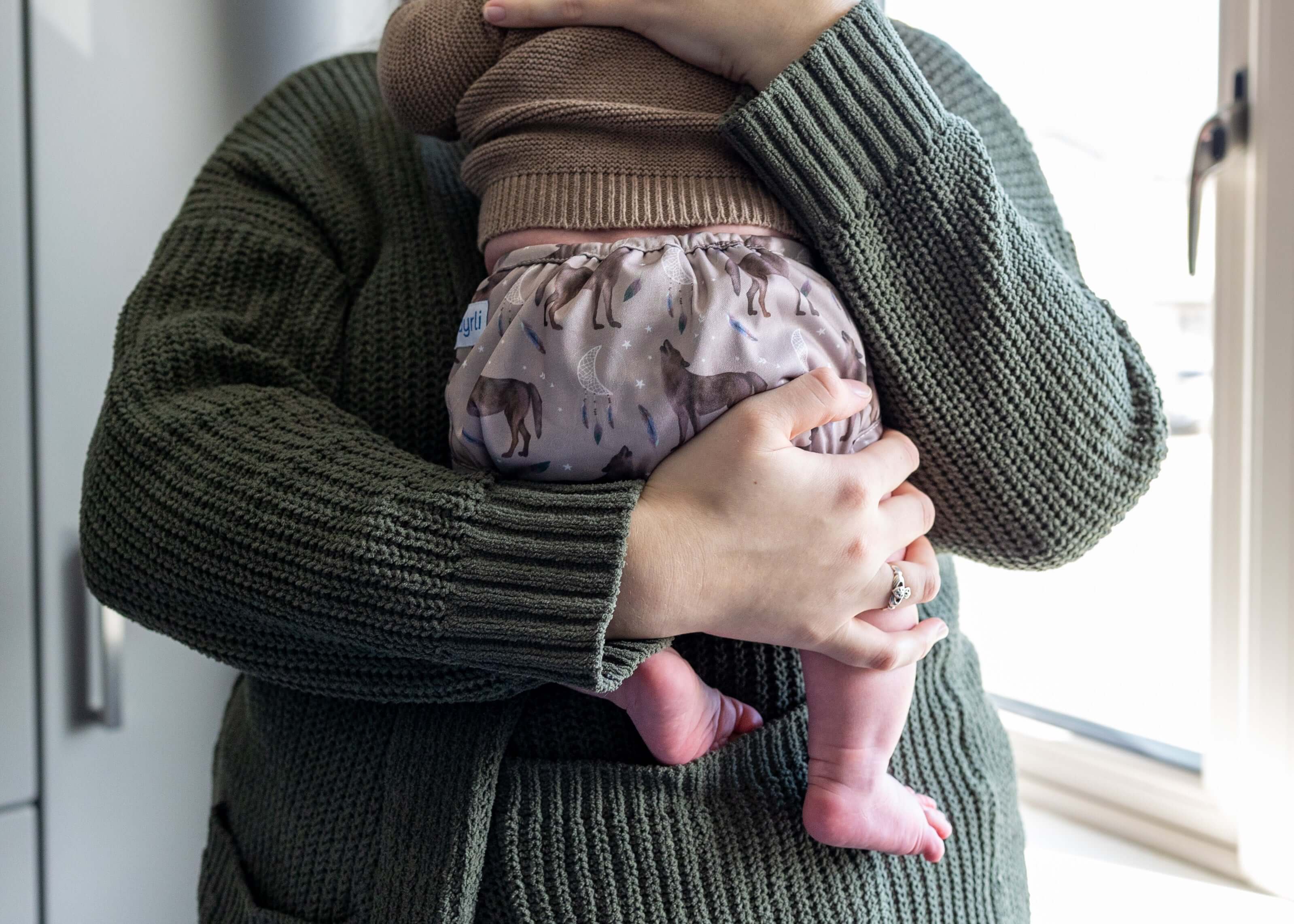
TPU is the material we use in every Bayrli product: our Everyday Pocket Diapers, our Deluxe All-in-One Diapers, our Outer Diaper Covers, and our reusable period pads.
The Practical Differences
Here is a direct comparison of the two materials as they perform in real-world use.
| PUL | TPU | |
|---|---|---|
| Manufacturing method | Chemical adhesive lamination | Thermal bonding (no adhesives) |
| Breathability | Lower; restricts airflow | Higher; allows air circulation |
| Flexibility | Stiffer; can feel plastic-like | Softer; moves with the baby |
| Temperature regulation | Traps heat | Better heat dissipation |
| Durability | Prone to delamination over time | More resistant to repeated washing |
| Thickness | Typically thicker | Thinner, contributing to a trimmer fit |
| Chemical exposure | Adhesive residues may be present | Inert in finished form; no active compounds |
| Allergy risk | Low, but adhesive sensitivity is possible | Very low; no adhesive chemicals present |
Why We Chose TPU
We considered every viable waterproofing option when designing Bayrli products. We even explored natural latex rubber as an alternative. The problem with latex was straightforward: allergies. Latex sensitivity affects a meaningful proportion of the population, and we were not prepared to exclude those families. Accessibility is a design principle for us, not an afterthought.
TPU offered the best combination of safety, performance, and comfort. It is inert in its finished form, meaning there are no active chemical compounds in contact with your baby's skin. It is breathable, which reduces the heat and moisture that cause rashes. It is durable, standing up to hundreds of wash cycles without delaminating. And it is thinner, which means our diapers fit trimly under clothing rather than adding bulk.
We apply our TPU coating to the inner surface of the outer fabric layer. This means the waterproof barrier is enclosed within the diaper rather than sitting exposed on the outside, where it could cause the diaper to shift or slide. We then add additional elastics and grips to the external layers for further security. These are engineering decisions driven by how our own children wore these diapers, not by what is cheapest to manufacture.
Safety and Compliance
Every Bayrli product is CPSIA compliant, meaning it meets all applicable US federal safety standards for children's products. We test annually with a Consumer Product Safety Commission accepted laboratory. This testing covers lead content, phthalates, flammability, and other safety parameters. We do this because it is the right thing to do, and because we believe you should expect nothing less from any brand that puts a product against your baby's skin.
Our diapers are made with certified organic cotton for all skin-contact surfaces. The TPU layer provides leak protection without compromising the safety or comfort of the organic materials surrounding it.
What This Means for You
Most parents will never think about the waterproofing in their baby's diaper, and for parents using disposables, the question does not arise in the same way. But if you are choosing cloth, you are already making a more considered decision about what goes on your child. It is worth extending that consideration to the materials themselves.
Not every brand will tell you whether they use PUL or TPU. We encourage you to ask. Transparency about materials is, in our view, a baseline expectation for any company making products for children. If a brand cannot tell you what their waterproof layer is made of, that tells you something.
At Bayrli, we chose TPU because it is safer, more comfortable, more breathable, and more durable. It costs more to manufacture. That is a trade-off we are entirely comfortable with.
If you would like to explore our range and see the difference TPU makes in practice, our Try It Kit is the simplest way to start. It gives you everything you need to test the Bayrli system before committing to a full stash. And our diaper calculator will help you work out exactly what a full-time setup looks like for your family.
Frequently Asked Questions
What is the difference between PUL and TPU in cloth diapers? PUL (Polyurethane Laminate) is a waterproof fabric made by bonding a polyurethane film to fabric using chemical adhesives. TPU (Thermoplastic Polyurethane) is a waterproof fabric made by bonding a thermoplastic film to fabric using heat alone, with no chemical adhesives. TPU is more breathable, more flexible, more durable, and free from adhesive chemicals.
Is TPU better than PUL for cloth diapers? TPU is superior to PUL on four dimensions: breathability (allows more air transfer, reducing heat and moisture buildup), flexibility (moves more naturally with your baby), durability (thermal bond resists delamination better than adhesive bond), and chemical safety (no adhesive layer between film and fabric). TPU costs more to manufacture, which is why most brands use PUL.
What is delamination in cloth diapers? Delamination is when the waterproof film peels away from the fabric base in a PUL or TPU diaper. Once delamination begins, the diaper is no longer waterproof. It is more common with PUL because the chemical adhesive that bonds the film to fabric degrades over time through heat, washing, and age. TPU's thermal bond is more resistant to delamination because there is no adhesive layer to fail.
Why do most cloth diaper brands use PUL instead of TPU? PUL is cheaper to manufacture. The adhesive bonding process is faster, less energy-intensive, and produces fabric at a lower cost per metre than TPU's thermal bonding process. Brands competing primarily on price choose PUL for this reason.
Is PUL safe for babies? PUL is generally considered safe and is widely used in cloth diapers. However, the manufacturing process uses chemical adhesives that are present in the finished product between the fabric and waterproof film. TPU eliminates this adhesive layer entirely. For parents who want to minimise their baby's exposure to unnecessary chemicals, TPU is the preferable choice.
Which cloth diaper brands use TPU? Bayrli uses TPU across its entire product range. Esembly also uses TPU for their Outer covers. The majority of cloth diaper brands, including bumGenius, Thirsties, GroVia, Bambino Mio, TotsBots, Kanga Care, and others, use PUL.